CAR-T

Treatment

Process

Individualized Treatment Specifically
for each Patient

CAR-T

Treatment

Process

Sub-Heading

CAR-T

Treatment

Process

Individualized Treatment Specifically for each Patient

circle_registration
Bo. Nam am eicte pro quunt omnime diosaer eptam, sus. Ibus, nonectae nos autatem int ressequi offic totat vel inulparum que nus. Niscianimo bla il ea quo corum fugiant et et quatiundae eritatius vellum a cus aut labo. Nemporeicae quame mod magnati aspedi temporecto cus, ut est quis ium dolorpo ssequiatur mincilia eos

Patient Eligibility and Referral to a Certified Centre

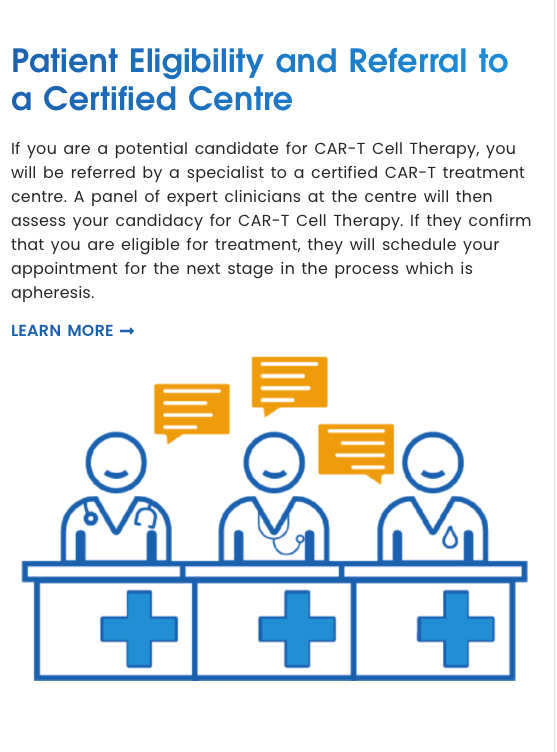
If you are a potential candidate for CAR-T Cell Therapy, you will be referred by a specialist to a certified CAR-T treatment centre. A panel of expert clinicians at the centre will then assess your candidacy for CAR-T Cell Therapy. If they confirm that you are eligible for treatment, they will schedule your appointment for the next stage in the process which is apheresis.

Apheresis

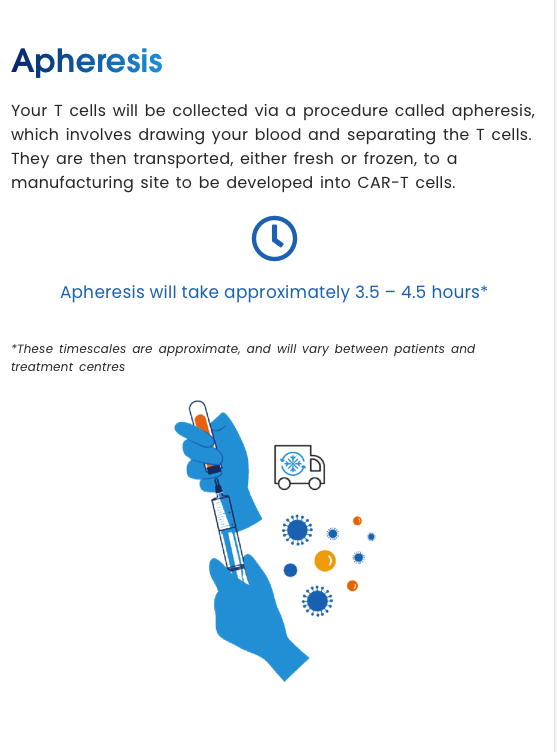
Your T cells will be collected via a procedure called apheresis, which involves drawing your blood and separating the T cells. They are then transported, either fresh or frozen, to a manufacturing site to be developed into CAR-T cells.

Apheresis will take approximately 3.5 – 4.5 hours*

*These timescales are approximate, and will vary between patients and treatment centres

Bridging Therapy

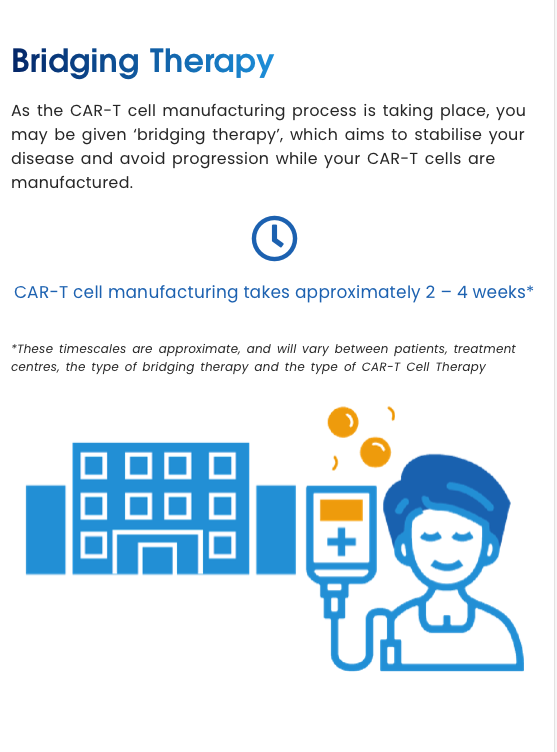
As the CAR-T cell manufacturing process is taking place, you may be given ‘bridging therapy’, which aims to stabilise your disease and avoid progression while your CAR-T cells are manufactured.

CAR-T cell manufacturing takes approximately 2 – 4 weeks*

*These timescales are approximate, and will vary between patients, treatment centres, the type of bridging therapy and the type of CAR-T Cell Therapy

Lymphodepleting Therapy

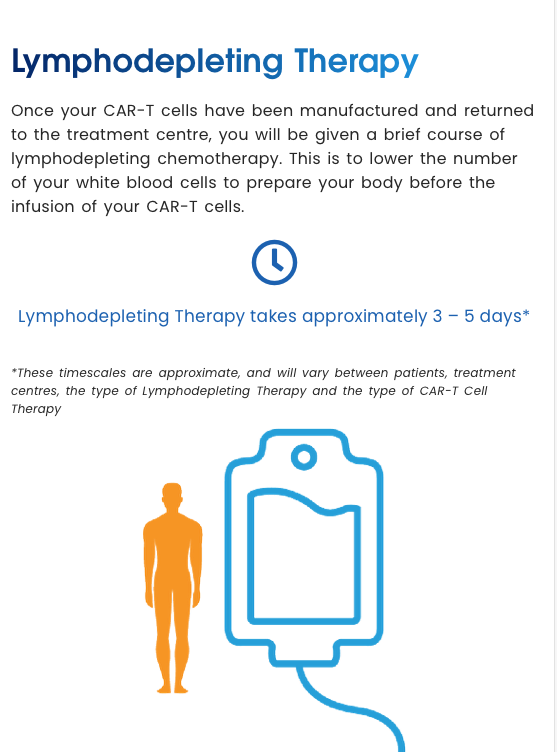
Once your CAR-T cells have been manufactured and returned to the treatment centre, you will be given a brief course of lymphodepleting chemotherapy. This is to lower the number of your white blood cells to prepare your body before the infusion of your CAR-T cells.

Lymphodepleting Therapy takes approximately 3 – 5 days*
*These timescales are approximate, and will vary between patients, treatment centres, the type of Lymphodepleting Therapy and the type of CAR-T Cell Therapy

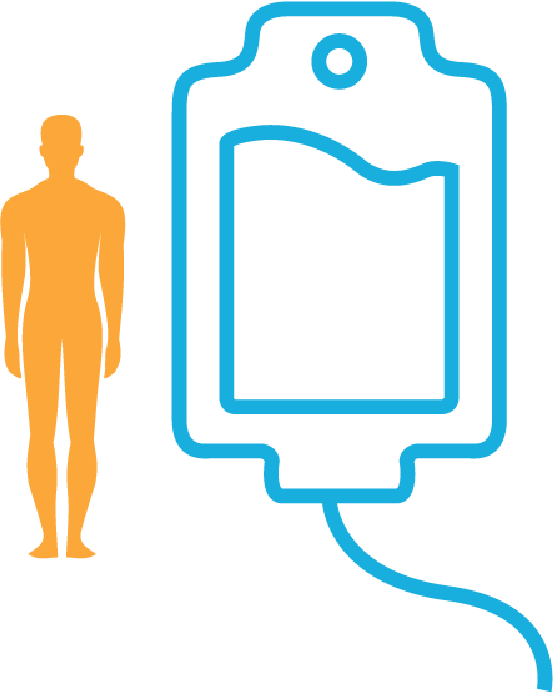
CAR-T Cell Infusion

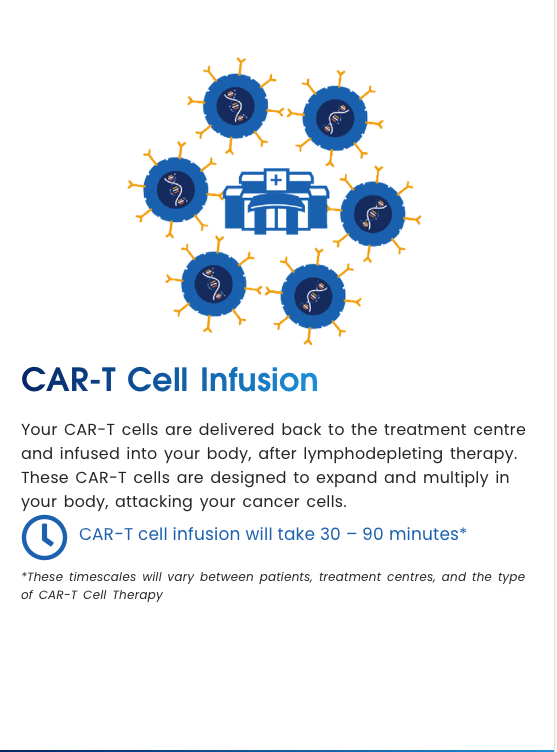
Your CAR-T cells are delivered back to the treatment centre and infused into your body, after lymphodepleting therapy. These CAR-T cells are designed to expand and multiply in your body, attacking your cancer cells.

CAR-T cell infusion will take 30 – 90 minutes*

*These timescales will vary between patients, treatment centres, and the type of CAR-T Cell Therapy

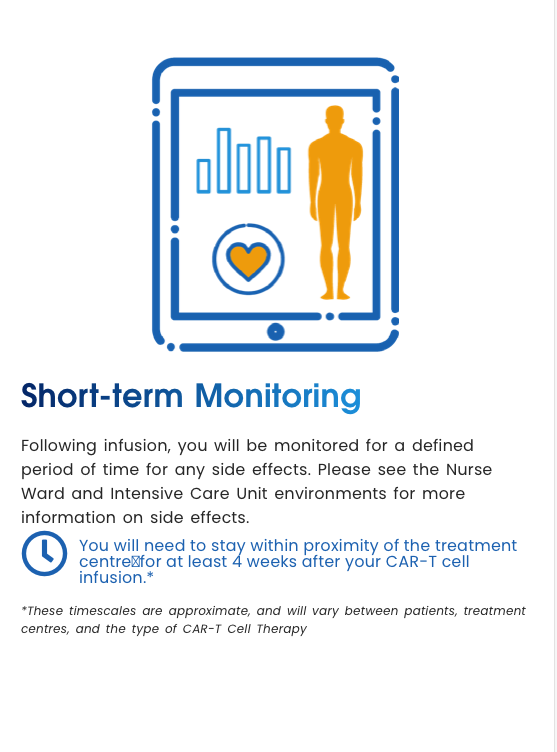
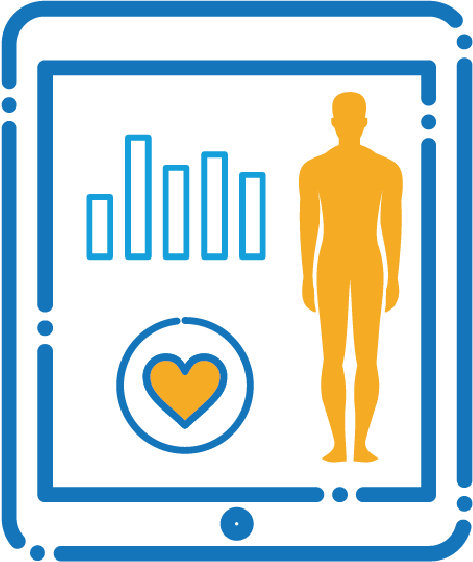
Short-term Monitoring

Following infusion, you will be monitored for a defined period of time for any side effects. Please see the Nurse Ward and Intensive Care Unit environments for more information on side effects.

You will need to stay within proximity of the treatment centre for at least 4 weeks after your CAR-T cell infusion.*
*These timescales are approximate, and will vary between patients, treatment centres, and the type of CAR-T Cell Therapy

Long-term Monitoring

Long-term monitoring, for any late-onset side effects, takes place once you have been discharged from the CAR-T centre. You will have regular check-ups with either your referring physician or the CAR-T healthcare team.

The timings of your long-term monitoring will depend on your clinical condition and individual needs, your healthcare team will discuss this with you.*

*In some instances, your referring physician and your CAR-T centre physician may be the same person, and /or may come from the same healthcare centre

Long-term Monitoring

Long-term monitoring, for any late-onset side effects, takes place once you have been discharged from the CAR-T centre. You will have regular check-ups with either your referring physician or the CAR-T healthcare team.

The timings of your long-term monitoring will depend on your clinical condition and individual needs, your healthcare team will discuss this with you.*

*In some instances, your referring physician and your CAR-T centre physician may be the same person, and /or may come from the same healthcare centre

Patient Eligibility and Referral to a Certified Centre

If you are a potential candidate for CAR-T Cell Therapy, you will be referred by a specialist to a certified CAR-T treatment centre. A panel of expert clinicians at the centre will then assess your candidacy for CAR-T Cell Therapy. If they confirm that you are eligible for treatment, they will schedule your appointment for the next stage in the process which is apheresis.

Apheresis

Your T cells will be collected via a procedure called apheresis, which involves drawing your blood and separating the T cells. They are then transported, either fresh or frozen, to a manufacturing site to be developed into CAR-T cells.

Apheresis will take approximately 3.5 – 4.5 hours*

*These timescales are approximate, and will vary between patients and treatment centres

Bridging Therapy

As the CAR-T cell manufacturing process is taking place, you may be given ‘bridging therapy’, which aims to stabilise your disease and avoid progression while your CAR-T cells are manufactured.

CAR-T cell manufacturing takes approximately 2 – 4 weeks*

*These timescales are approximate, and will vary between patients, treatment centres, the type of bridging therapy and the type of CAR-T Cell Therapy

Lymphodepleting Therapy

Once your CAR-T cells have been manufactured and returned to the treatment centre, you will be given a brief course of lymphodepleting chemotherapy. This is to lower the number of your white blood cells to prepare your body before the infusion of your CAR-T cells.

Lymphodepleting Therapy takes approximately 3 – 5 days*

*These timescales are approximate, and will vary between patients, treatment centres, the type of Lymphodepleting Therapy and the type of CAR-T Cell Therapy

CAR-T Cell Infusion

Your CAR-T cells are delivered back to the treatment centre and infused into your body, after lymphodepleting therapy. These CAR-T cells are designed to expand and multiply in your body, attacking your cancer cells.

CAR-T cell infusion will take 30 – 90 minutes*

*These timescales will vary between patients, treatment centres, and the type of CAR-T Cell Therapy

Short-term Monitoring

Following infusion, you will be monitored for a defined period of time for any side effects. Please see the Nurse Ward and Intensive Care Unit environments for more information on side effects.

You will need to stay within proximity of the treatment centre for at least 4 weeks after your CAR-T cell infusion.*

*These timescales are approximate, and will vary between patients, treatment centres, and the type of CAR-T Cell Therapy

Long-term Monitoring

Long-term monitoring, for any late-onset side effects, takes place once you have been discharged from the CAR-T centre. You will have regular check-ups with either your referring physician or the CAR-T healthcare team.

The timings of your long-term monitoring will depend on your clinical condition and individual needs, your healthcare team will discuss this with you.*

*In some instances, your referring physician and your CAR-T centre physician may be the same person, and /or may come from the same healthcare centre

Long-term Monitoring

Long-term monitoring, for any late-onset side effects, takes place once you have been discharged from the CAR-T centre. You will have regular check-ups with either your referring physician or the CAR-T healthcare team.

The timings of your long-term monitoring will depend on your clinical condition and individual needs, your healthcare team will discuss this with you.*

*In some instances, your referring physician and your CAR-T centre physician may be the same person, and /or may come from the same healthcare centre

Variante 01

Patient Eligibility and Referral to a Certified Centre

If you are a potential candidate for CAR-T Cell Therapy, you will be referred by a specialist to a certified CAR-T treatment centre. A panel of expert clinicians at the centre will then assess your candidacy for CAR-T Cell Therapy. If they confirm that you are eligible for treatment, they will schedule your appointment for the next stage in the process which is apheresis.

Apheresis

Your T cells will be collected via a procedure called apheresis, which involves drawing your blood and separating the T cells. They are then transported, either fresh or frozen, to a manufacturing site to be developed into CAR-T cells.

Apheresis will take approximately 3.5 – 4.5 hours*

*These timescales are approximate, and will vary between patients and treatment centres

Bridging Therapy

As the CAR-T cell manufacturing process is taking place, you may be given ‘bridging therapy’, which aims to stabilise your disease and avoid progression while your CAR-T cells are manufactured.

CAR-T cell manufacturing takes approximately 2 – 4 weeks*

*These timescales are approximate, and will vary between patients, treatment centres, the type of bridging therapy and the type of CAR-T Cell Therapy

Lymphodepleting Therapy

Once your CAR-T cells have been manufactured and returned to the treatment centre, you will be given a brief course of lymphodepleting chemotherapy. This is to lower the number of your white blood cells to prepare your body before the infusion of your CAR-T cells.

Lymphodepleting Therapy takes approximately 3 – 5 days*

*These timescales are approximate, and will vary between patients, treatment centres, the type of Lymphodepleting Therapy and the type of CAR-T Cell Therapy

CAR-T Cell Infusion

Your CAR-T cells are delivered back to the treatment centre and infused into your body, after lymphodepleting therapy. These CAR-T cells are designed to expand and multiply in your body, attacking your cancer cells.

CAR-T cell infusion will take 30 – 90 minutes*

*These timescales will vary between patients, treatment centres, and the type of CAR-T Cell Therapy

Short-term Monitoring

Following infusion, you will be monitored for a defined period of time for any side effects. Please see the Nurse Ward and Intensive Care Unit environments for more information on side effects.

You will need to stay within proximity of the treatment centre for at least 4 weeks after your CAR-T cell infusion.*

*These timescales are approximate, and will vary between patients, treatment centres, and the type of CAR-T Cell Therapy

Long-term Monitoring

Long-term monitoring, for any late-onset side effects, takes place once you have been discharged from the CAR-T centre. You will have regular check-ups with either your referring physician or the CAR-T healthcare team.

The timings of your long-term monitoring will depend on your clinical condition and individual needs, your healthcare team will discuss this with you.*

*In some instances, your referring physician and your CAR-T centre physician may be the same person, and /or may come from the same healthcare centre

Long-term Monitoring

Long-term monitoring, for any late-onset side effects, takes place once you have been discharged from the CAR-T centre. You will have regular check-ups with either your referring physician or the CAR-T healthcare team.

The timings of your long-term monitoring will depend on your clinical condition and individual needs, your healthcare team will discuss this with you.*

*In some instances, your referring physician and your CAR-T centre physician may be the same person, and /or may come from the same healthcare centre

Variante 02

The 7 Steps of the

CAR-T Process
Variante 03

The 7 Steps of the

CAR-T Process
Patient Eligibility

Patient Eligibility and Referral to a Certified Centre

If you are a potential candidate for CAR-T Cell Therapy, you will be referred by a specialist to a certified CAR-T treatment centre. A panel of expert clinicians at the centre will then assess your candidacy for CAR-T Cell Therapy. If they confirm that you are eligible for treatment, they will schedule your appointment for the next stage in the process which is apheresis.

Apheresis

Apheresis

Your T cells will be collected via a procedure called apheresis, which involves drawing your blood and separating the T cells. They are then transported, either fresh or frozen, to a manufacturing site to be developed into CAR-T cells.

Apheresis will take approximately 3.5 – 4.5 hours*

*These timescales are approximate, and will vary between patients and treatment centres

Bridging Therapy

Bridging Therapy

As the CAR-T cell manufacturing process is taking place, you may be given ‘bridging therapy’, which aims to stabilise your disease and avoid progression while your CAR-T cells are manufactured.

CAR-T cell manufacturing takes approximately 2 – 4 weeks*

*These timescales are approximate, and will vary between patients, treatment centres, the type of bridging therapy and the type of CAR-T Cell Therapy

Lymphodepleting TherapyTab Title

Lymphodepleting Therapy

Once your CAR-T cells have been manufactured and returned to the treatment centre, you will be given a brief course of lymphodepleting chemotherapy. This is to lower the number of your white blood cells to prepare your body before the infusion of your CAR-T cells.

Lymphodepleting Therapy takes approximately 3 – 5 days*

*These timescales are approximate, and will vary between patients, treatment centres, the type of Lymphodepleting Therapy and the type of CAR-T Cell Therapy
CAR-T Cell Infusion

CAR-T Cell Infusion

Your CAR-T cells are delivered back to the treatment centre and infused into your body, after lymphodepleting therapy. These CAR-T cells are designed to expand and multiply in your body, attacking your cancer cells.

CAR-T cell infusion will take 30 – 90 minutes*

*These timescales will vary between patients, treatment centres, and the type of CAR-T Cell Therapy
Short-term Monitoring

Short-term Monitoring

Following infusion, you will be monitored for a defined period of time for any side effects. Please see the Nurse Ward and Intensive Care Unit environments for more information on side effects.

You will need to stay within proximity of the treatment centre for at least 4 weeks after your CAR-T cell infusion.*

*These timescales are approximate, and will vary between patients, treatment centres, and the type of CAR-T Cell Therapy
Long-term Monitoring

Long-term Monitoring

Long-term monitoring, for any late-onset side effects, takes place once you have been discharged from the CAR-T centre. You will have regular check-ups with either your referring physician or the CAR-T healthcare team.

The timings of your long-term monitoring will depend on your clinical condition and individual needs, your healthcare team will discuss this with you.*

*In some instances, your referring physician and your CAR-T centre physician may be the same person, and /or may come from the same healthcare centre

Long-term Monitoring

Long-term monitoring, for any late-onset side effects, takes place once you have been discharged from the CAR-T centre. You will have regular check-ups with either your referring physician or the CAR-T healthcare team.

The timings of your long-term monitoring will depend on your clinical condition and individual needs, your healthcare team will discuss this with you.*

*In some instances, your referring physician and your CAR-T centre physician may be the same person, and /or may come from the same healthcare centre

1.

Bo. Nam am eicte pro quunt omnime diosaer eptam, sus. Ibus, nonectae nos autatem int ressequi offic totat vel inulparum que nus. Niscianimo bla il.


2.

Bo. Nam am eicte pro quunt omnime diosaer eptam, sus. Ibus, nonectae nos autatem int ressequi offic totat vel inulparum que nus. Niscianimo bla il.

3.

Bo. Nam am eicte pro quunt omnime diosaer eptam, sus. Ibus, nonectae nos autatem int ressequi offic totat vel inulparum que nus. Niscianimo bla il.

4.

Bo. Nam am eicte pro quunt omnime diosaer eptam, sus. Ibus, nonectae nos autatem int ressequi offic totat vel inulparum que nus. Niscianimo bla il.

Bo. Nam am eicte pro quunt omnime diosaer eptam, sus. Ibus, nonectae nos autatem int ressequi offic totat vel inulparum que nus. Niscianimo bla il ea quo corum fugiant et et quatiundae eritatius vellum a cus aut labo. Nemporeicae quame mod magnati aspedi temporecto cus, ut est quis ium dolorpo ssequiatur mincilia eo


Bo. Nam am eicte pro quunt omnime diosaer eptam, sus. Ibus, nonectae nos autatem int ressequi offic totat vel inulparum que nus. Niscianimo bla il ea quo corum fugiant et et quatiundae eritatius vellum a cus aut labo. Nemporeicae quame mod magnati aspedi temporecto cus, ut est quis ium dolorpo ssequiatur mincilia eos

Education